
Philippines staffing research ·
How should an outsourced programmer triage software bugs without owning product priority?
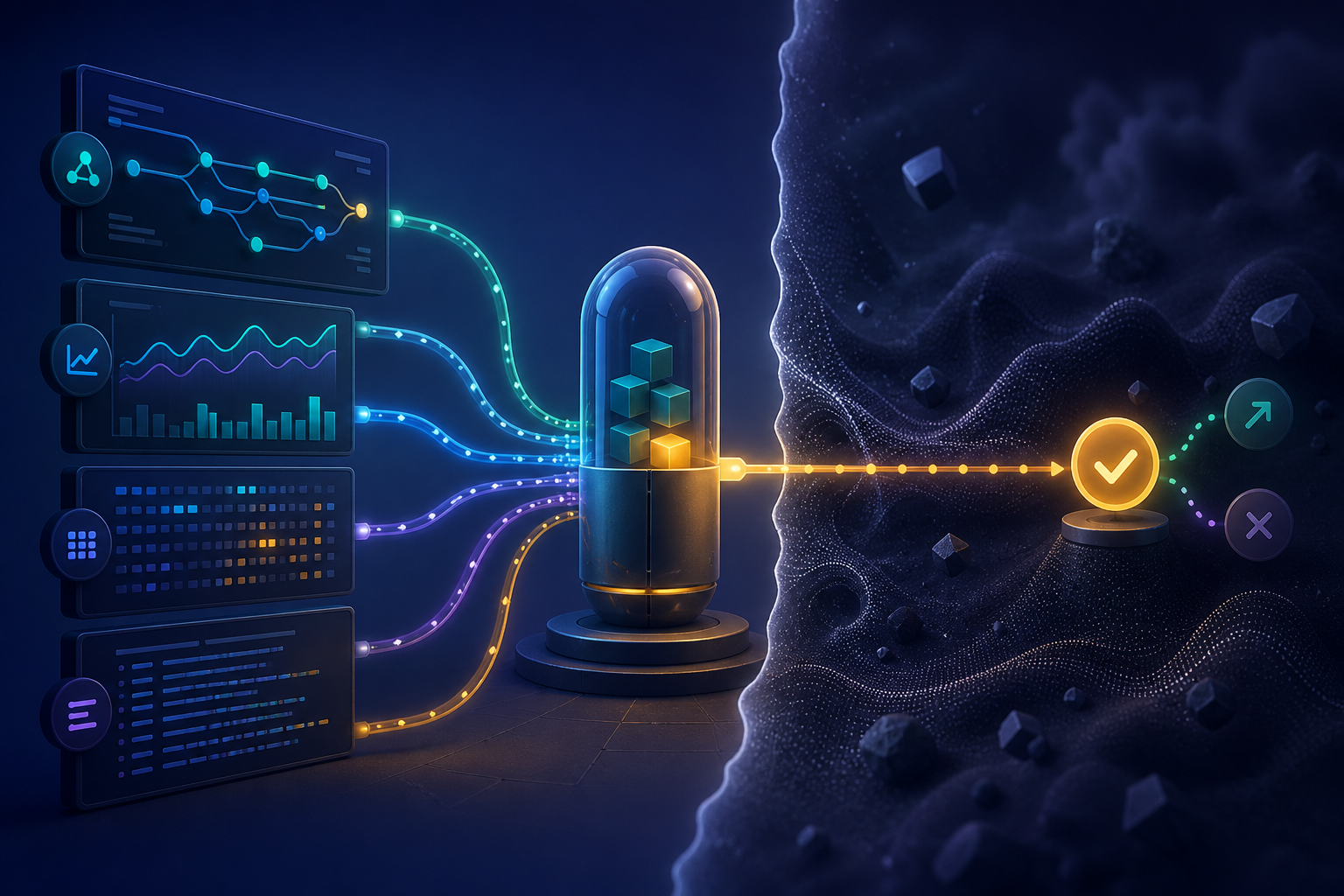
A decision model for reproducible evidence, severity, routing, and owner-controlled priority in a distributed support lane.
Bug triage turns an uncertain report into evidence that the right owner can act on. It is not the same as deciding which customer, feature, or commercial commitment matters most. An outsourced programmer can reproduce a symptom, identify affected boundaries, estimate technical reach, and propose safe containment. The company still owns product priority, customer promises, incident declarations, and release decisions. Keeping those decisions separate lets a distributed support lane move quickly without quietly giving a contractor authority that belongs with accountable product and technical owners.
This study combines official incident, vulnerability, accessibility, and issue-management guidance with the site's app-support service model. The method follows one report from intake through reproduction, classification, routing, correction evidence, and closure. Facts are submitted artifacts and observed behavior. Analysis connects observations to impact and likely ownership. Inference estimates unobserved reach. Uncertainty is recorded rather than converted into a confident label. No client ticket history or outcome data was available, so this is a decision framework, not evidence that one process reduces resolution time. Sources were checked October 5, 2026.
Begin with a stable intake record. Capture a plain-language symptom, reporter context, first observed time, last known working state, application revision, environment, device or browser, account class, expected result, actual result, and reversible steps already attempted. Attach sanitized screenshots, console output, request identifiers, or recordings when they explain the issue. Do not paste credentials, session tokens, personal records, payment details, or an entire production log into the ticket. Preserve the reporter's original words before translating them into engineering language so later reviewers can distinguish observation from interpretation.
Reproduction is a controlled investigation, not repeated clicking until something breaks. Use an approved non-production environment and synthetic identity where possible. Change one relevant condition at a time: revision, role, browser, locale, viewport, data state, feature flag, or network condition. Record successful and unsuccessful attempts. A failure appearing only with one account may point to data or authorization; a failure across clean identities may indicate a broader boundary. Production observation can be necessary, but active changes and invasive tests remain owner-approved actions. State when privacy or access limits prevent confirmation.
Severity describes consequence under stated conditions. Priority describes when the organization chooses to act. A reproducible authorization bypass can be severe even when few users report it. A harmless copy error may receive urgent priority because a launch is imminent. Propose severity using confidentiality, integrity, availability, financial effect, accessibility exclusion, data loss, reversibility, scope, and workaround quality. The product or incident owner then assigns priority using customer commitments, business timing, dependencies, and capacity. Never lower the recorded technical consequence merely to fit a delivery target.
Security signals need a private route. Suspected credential exposure, cross-account access, injection, unintended disclosure, or exploitable authorization behavior should leave the ordinary queue and enter the approved vulnerability or incident channel. Preserve minimum evidence and avoid broadening the test. Do not contact customers, rotate shared infrastructure, or publish technical detail without authorization. Accessibility defects likewise need functional evidence: user action, input method, assistive technology when relevant, browser, expected result, and blocking behavior. Automated scan output is a lead, not proof of conformance or complete coverage.
Route ownership from the smallest demonstrated boundary. A malformed API response belongs with the service contract owner; a correct response rendered incorrectly points toward the client; a stale deployment points toward release operations; inconsistent synthetic data belongs with the environment owner. When the boundary is uncertain, name one investigation owner and the next discriminating experiment instead of assigning several teams. Containment must be reversible and proportionate, with an executor, environment, expiry, observation, and exit condition. A workaround that loses data, weakens authorization, or bypasses approval is not safe because it is fast.
A useful handoff contains a minimal reproduction, affected and unaffected conditions, revision, sanitized evidence, severity rationale, suspected boundary, excluded explanations, workaround, and unanswered question. Link the authoritative ticket and artifacts rather than copying divergent summaries into chat. For a Philippines-to-client lane, an end-of-shift note names new high-impact findings, owner decisions needed, experiments in progress, and the exact next action. It must not imply round-the-clock coverage unless the engagement provides it. Disagreement between product and engineering remains visible with both rationales and a named decision owner.
Closure needs more than a merged patch. Repeat the original reproduction on the corrected revision, exercise an adjacent negative case, confirm logs and tests do not expose sensitive material, and state the environment tested. For intermittent bugs, report the count and configuration of attempts without claiming repeated passes prove absence. Measure evidence completeness, time to a reproducible or explicitly non-reproducible disposition, reroutes caused by missing work, aging owner decisions, reopened defects, and high-impact items lacking containment. Raw ticket counts and blended averages reward shallow closure and conceal old dangerous items.
Limitations are material. Non-production data may not reproduce production state, privacy controls can restrict evidence, and one browser symptom may conceal several services. A short investigation cannot establish affected population. Vendor incidents can disappear before capture. NIST, CISA, OWASP, WCAG, and GitHub documentation provide control and platform guidance; they do not assign contractual roles or validate a conclusion. Approve the lane only with authoritative records, safe evidence rules, severity dimensions, private escalation, a priority owner, and a closure test. The programmer owns technical evidence; the company owns business priority, incident authority, customer communication, merge, and release.
Use a severity worksheet with one row for each demonstrated consequence, not one label for the whole story. Record the asset or journey, precondition, observed effect, scope evidence, reversibility, workaround, and confidence. A checkout failure for one unsupported browser and deletion of saved customer data may originate in the same release but demand different treatment. Where scale is unknown, state “confirmed for these conditions; broader reach unmeasured.” The owner can then commission a query or log review without presenting an estimate as a measured population.
Non-reproduction also needs a disposition. Confirm the reporter's environment, whether the revision and flag were present, and sanitized telemetry for the time window. List conditions that could not be recreated. Do not close as “cannot reproduce” when equivalent permissions or data state were unavailable. Choose whether to request one precise artifact, add safe temporary observability, monitor a signature, or close with reopening criteria. This prevents repeated low-information investigations and treats the reporter's evidence honestly.
Design the queue so urgent language cannot bypass evidence. Alerts, executive reports, and customer escalations can all matter, but each enters the same minimum record and private security route. Reserve emergency interruption for stated consequence classes and appoint a duty owner. The outsourced programmer should not choose between two executives or customers. When urgent defects compete, provide comparable technical summaries and let the designated owner order the work.
Review a small closed-ticket sample monthly. Ask whether facts were reproducible, sensitive material was minimized, severity matched evidence, assignment followed the boundary, and closure retested the symptom. Feed recurring intake gaps into templates. Route repeated product or platform causes to their owners rather than treating every occurrence as a new support task. This turns triage into an improving interface without converting the programmer into product management.
A practical first-week exercise uses one closed low-risk defect and one synthetic urgent defect. Ask the programmer to rebuild both records from available evidence, identify what should have been private, propose severity, and name the next owner without changing production. The company reviewer compares proposed routing with the actual decision history and corrects ambiguous rules. This rehearsal tests the communication boundary before a live customer issue creates time pressure, while revealing missing access, unsafe artifacts, and unclear escalation ownership.
Document the owner response time the lane can rely on. A technically complete escalation still stalls when nobody is accountable for priority or customer decisions. If the named owner is absent, the fallback should be another authorized company role, not an assumption that the outsourced programmer may decide. Record delayed decisions as workflow risk and review them with the same care as missing reproduction evidence.
Sources
Related Research
Decide when an outsourced developer should enter a production incident
FAQ
What should happen first?
Begin with a bounded ticket, approved access, and a named reviewer.
Who approves production changes?
The company’s technical owner keeps final merge and release authority.